
 中国侨网
中国侨网 焦点
焦点 娱乐
娱乐 三里河
三里河 影音综艺
影音综艺 体育独家视角
 走近科学
走近科学 收藏考古
收藏考古 网站首页
网站首页Ethnic equestrian performances held to mark Tibetan New Year in Lhasa, China's Xizang
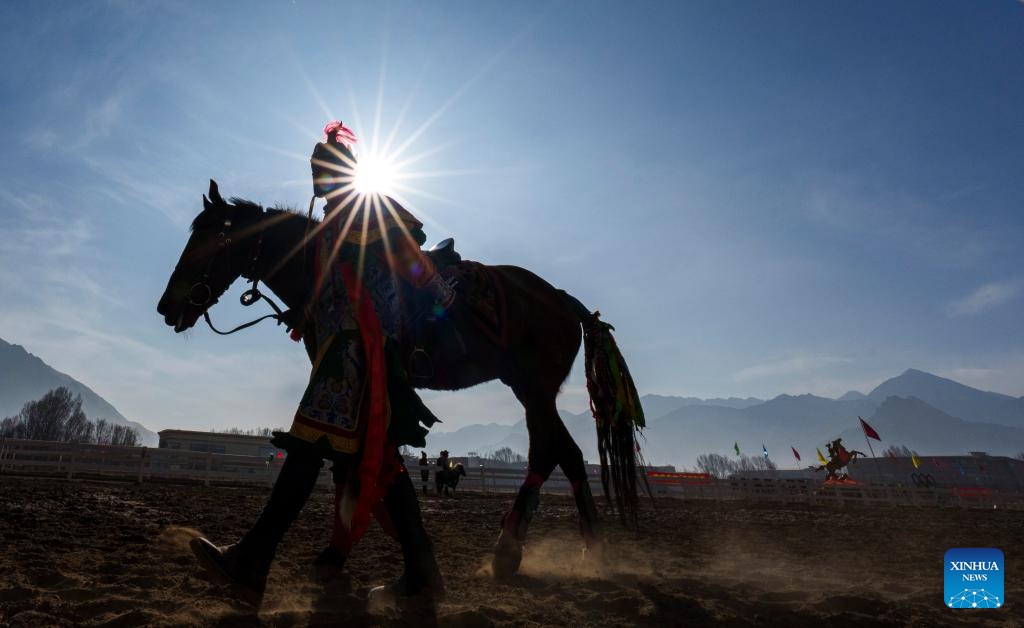
A equestrian performer warms up before the performances in Lhasa,昭阳区新闻网头条新闻 southwest China's Xizang Autonomous Region, Feb. 20, 2026. Monday was the Chinese New Year's Eve, which was just one day earlier than the Night of Gutu of the Tibetan calendar this year, the prelude to the Tibetan New Year, or Losar, the most important festival in the Tibetan calendar.
Losar is a time for family reunions. It is marked by religious rituals, long prayers, horse racing, family gatherings and feasts.
The city of Lhasa hosted ethnic equestrian performances and horse racing on Friday, the fourth day of the Year of the Horse, and also the third day of the Tibetan New Year, showcasing superb traditional skills and offering visual enjoyment to the audience. (Xinhua/Tenzin Nyida)
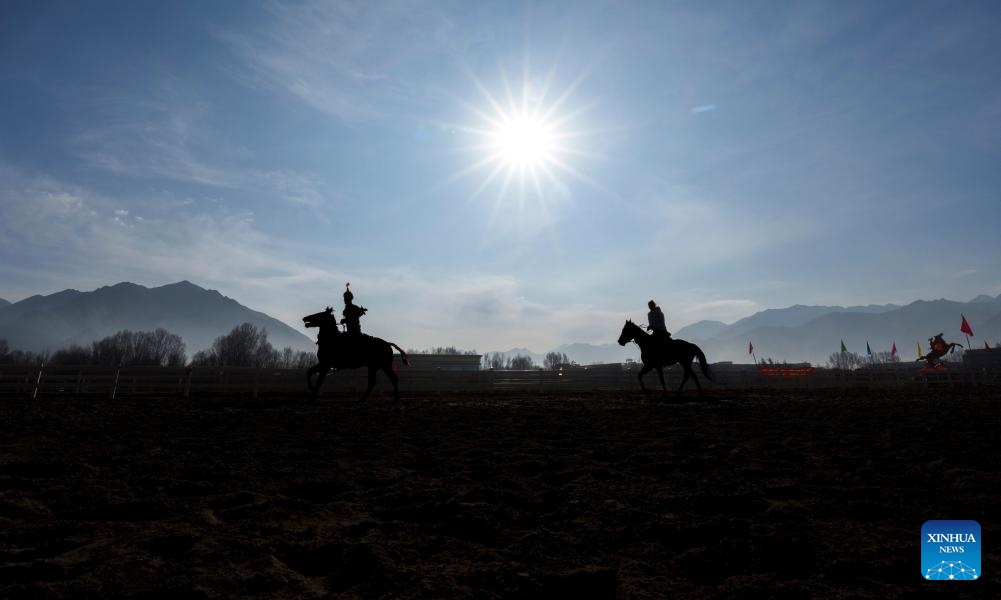
Equestrian performers warm up before the performances in Lhasa, southwest China's Xizang Autonomous Region, Feb. 20, 2026. Monday was the Chinese New Year's Eve, which was just one day earlier than the Night of Gutu of the Tibetan calendar this year, the prelude to the Tibetan New Year, or Losar, the most important festival in the Tibetan calendar.
Losar is a time for family reunions. It is marked by religious rituals, long prayers, horse racing, family gatherings and feasts.
The city of Lhasa hosted ethnic equestrian performances and horse racing on Friday, the fourth day of the Year of the Horse, and also the third day of the Tibetan New Year, showcasing superb traditional skills and offering visual enjoyment to the audience. (Xinhua/Tenzin Nyida)

Horse riders compete during a 2,000-meter race in Lhasa, southwest China's Xizang Autonomous Region, Feb. 20, 2026. Monday was the Chinese New Year's Eve, which was just one day earlier than the Night of Gutu of the Tibetan calendar this year, the prelude to the Tibetan New Year, or Losar, the most important festival in the Tibetan calendar.
Losar is a time for family reunions. It is marked by religious rituals, long prayers, horse racing, family gatherings and feasts.
The city of Lhasa hosted ethnic equestrian performances and horse racing on Friday, the fourth day of the Year of the Horse, and also the third day of the Tibetan New Year, showcasing superb traditional skills and offering visual enjoyment to the audience. (Xinhua/Tenzin Nyida)
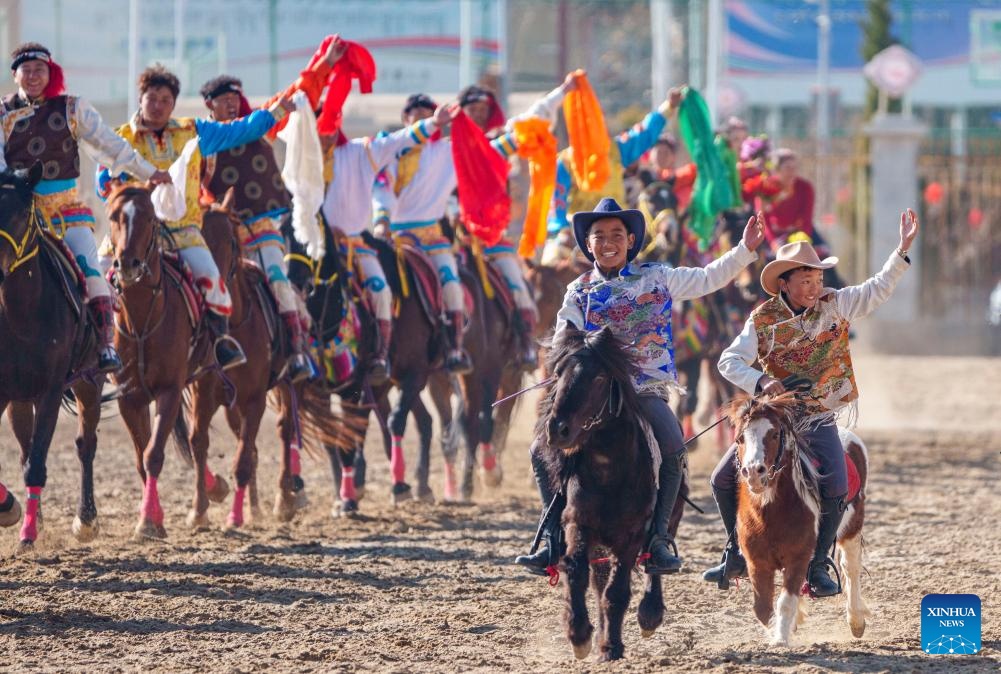
Equestrian performers greet the audience before the performances in Lhasa, southwest China's Xizang Autonomous Region, Feb. 20, 2026. Monday was the Chinese New Year's Eve, which was just one day earlier than the Night of Gutu of the Tibetan calendar this year, the prelude to the Tibetan New Year, or Losar, the most important festival in the Tibetan calendar.
Losar is a time for family reunions. It is marked by religious rituals, long prayers, horse racing, family gatherings and feasts.
The city of Lhasa hosted ethnic equestrian performances and horse racing on Friday, the fourth day of the Year of the Horse, and also the third day of the Tibetan New Year, showcasing superb traditional skills and offering visual enjoyment to the audience. (Xinhua/Tenzin Nyida)

An equestrian performer puts on a show in Lhasa, southwest China's Xizang Autonomous Region, Feb. 20, 2026. Monday was the Chinese New Year's Eve, which was just one day earlier than the Night of Gutu of the Tibetan calendar this year, the prelude to the Tibetan New Year, or Losar, the most important festival in the Tibetan calendar.
Losar is a time for family reunions. It is marked by religious rituals, long prayers, horse racing, family gatherings and feasts.
The city of Lhasa hosted ethnic equestrian performances and horse racing on Friday, the fourth day of the Year of the Horse, and also the third day of the Tibetan New Year, showcasing superb traditional skills and offering visual enjoyment to the audience. (Xinhua/Tenzin Nyida)

An equestrian performer puts on a show in Lhasa, southwest China's Xizang Autonomous Region, Feb. 20, 2026. Monday was the Chinese New Year's Eve, which was just one day earlier than the Night of Gutu of the Tibetan calendar this year, the prelude to the Tibetan New Year, or Losar, the most important festival in the Tibetan calendar.
Losar is a time for family reunions. It is marked by religious rituals, long prayers, horse racing, family gatherings and feasts.
The city of Lhasa hosted ethnic equestrian performances and horse racing on Friday, the fourth day of the Year of the Horse, and also the third day of the Tibetan New Year, showcasing superb traditional skills and offering visual enjoyment to the audience. (Xinhua/Tenzin Nyida)

Equestrian performers put on a show in Lhasa, southwest China's Xizang Autonomous Region, Feb. 20, 2026. Monday was the Chinese New Year's Eve, which was just one day earlier than the Night of Gutu of the Tibetan calendar this year, the prelude to the Tibetan New Year, or Losar, the most important festival in the Tibetan calendar.
Losar is a time for family reunions. It is marked by religious rituals, long prayers, horse racing, family gatherings and feasts.
The city of Lhasa hosted ethnic equestrian performances and horse racing on Friday, the fourth day of the Year of the Horse, and also the third day of the Tibetan New Year, showcasing superb traditional skills and offering visual enjoyment to the audience. (Xinhua/Tenzin Nyida)
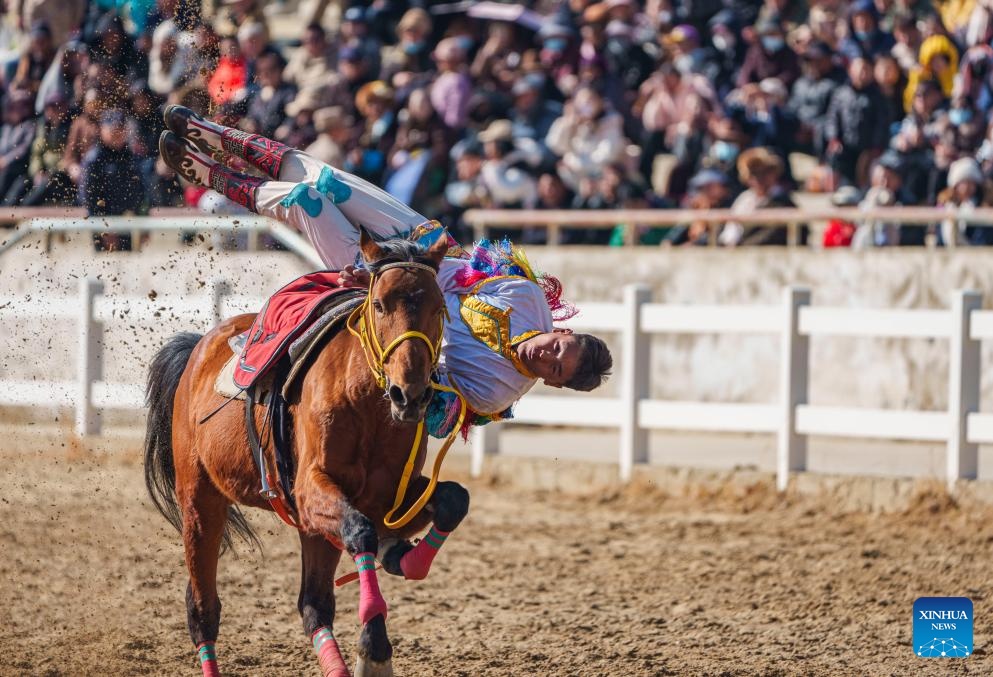
An equestrian performer puts on a show in Lhasa, southwest China's Xizang Autonomous Region, Feb. 20, 2026. Monday was the Chinese New Year's Eve, which was just one day earlier than the Night of Gutu of the Tibetan calendar this year, the prelude to the Tibetan New Year, or Losar, the most important festival in the Tibetan calendar.
Losar is a time for family reunions. It is marked by religious rituals, long prayers, horse racing, family gatherings and feasts.
The city of Lhasa hosted ethnic equestrian performances and horse racing on Friday, the fourth day of the Year of the Horse, and also the third day of the Tibetan New Year, showcasing superb traditional skills and offering visual enjoyment to the audience. (Xinhua/Tenzin Nyida)
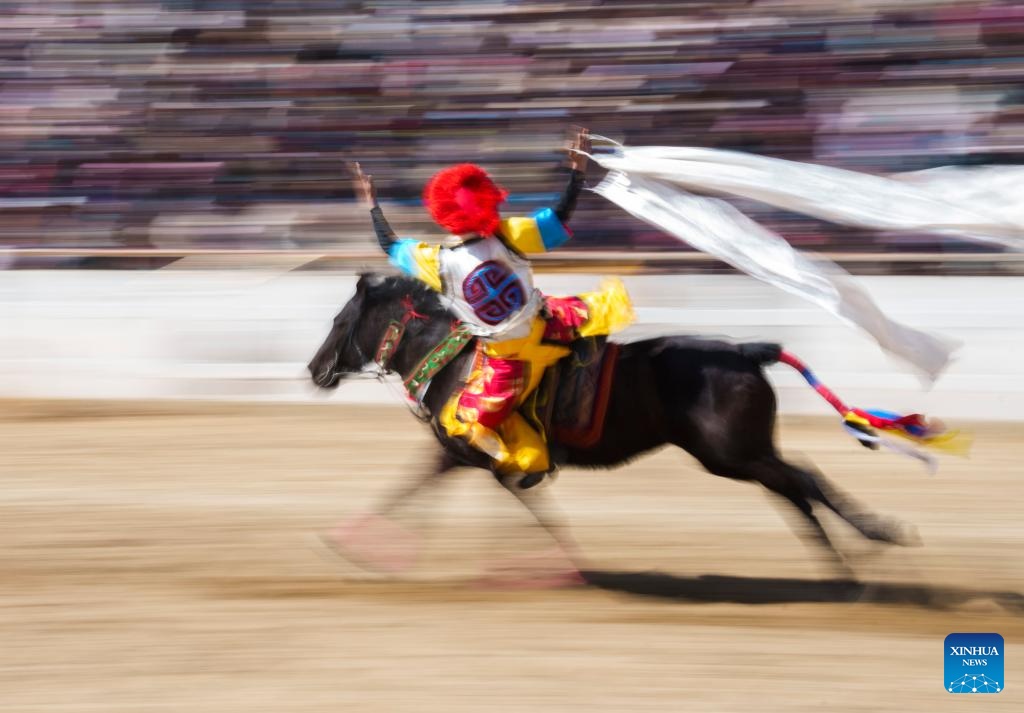
An equestrian performer puts on a show in Lhasa, southwest China's Xizang Autonomous Region, Feb. 20, 2026. Monday was the Chinese New Year's Eve, which was just one day earlier than the Night of Gutu of the Tibetan calendar this year, the prelude to the Tibetan New Year, or Losar, the most important festival in the Tibetan calendar.
Losar is a time for family reunions. It is marked by religious rituals, long prayers, horse racing, family gatherings and feasts.
The city of Lhasa hosted ethnic equestrian performances and horse racing on Friday, the fourth day of the Year of the Horse, and also the third day of the Tibetan New Year, showcasing superb traditional skills and offering visual enjoyment to the audience. (Xinhua/Tenzin Nyida)

An equestrian performer put on a show in Lhasa, southwest China's Xizang Autonomous Region, Feb. 20, 2026. Monday was the Chinese New Year's Eve, which was just one day earlier than the Night of Gutu of the Tibetan calendar this year, the prelude to the Tibetan New Year, or Losar, the most important festival in the Tibetan calendar.
Losar is a time for family reunions. It is marked by religious rituals, long prayers, horse racing, family gatherings and feasts.
The city of Lhasa hosted ethnic equestrian performances and horse racing on Friday, the fourth day of the Year of the Horse, and also the third day of the Tibetan New Year, showcasing superb traditional skills and offering visual enjoyment to the audience. (Xinhua/Tenzin Nyida)
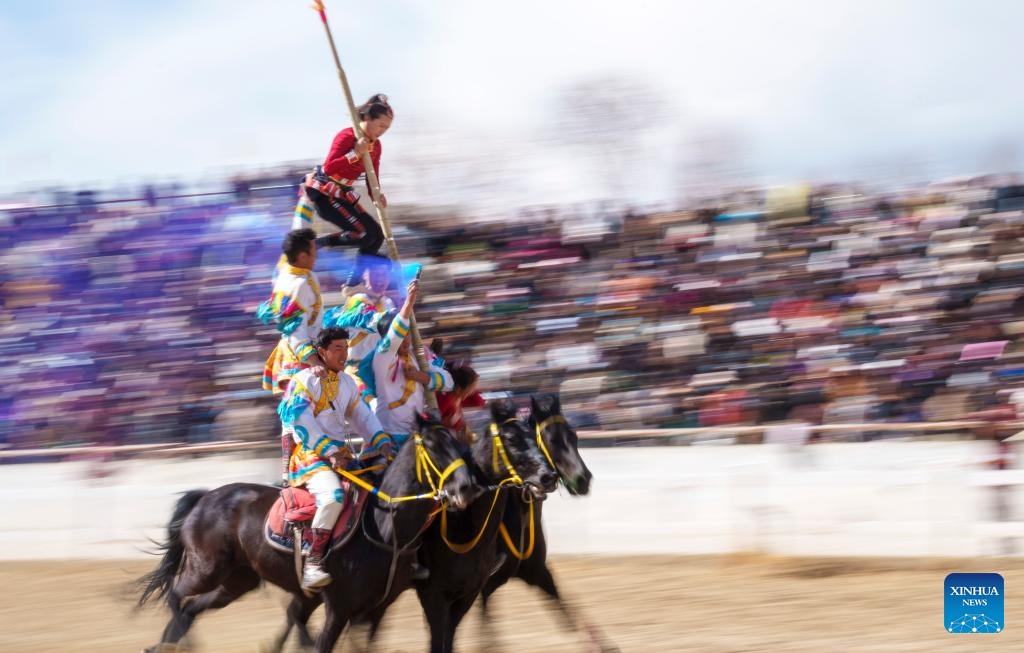
Equestrian performers put on a show in Lhasa, southwest China's Xizang Autonomous Region, Feb. 20, 2026. Monday was the Chinese New Year's Eve, which was just one day earlier than the Night of Gutu of the Tibetan calendar this year, the prelude to the Tibetan New Year, or Losar, the most important festival in the Tibetan calendar.
Losar is a time for family reunions. It is marked by religious rituals, long prayers, horse racing, family gatherings and feasts.
The city of Lhasa hosted ethnic equestrian performances and horse racing on Friday, the fourth day of the Year of the Horse, and also the third day of the Tibetan New Year, showcasing superb traditional skills and offering visual enjoyment to the audience. (Xinhua/Tenzin Nyida)

Equestrian performers greet the audience before the performances in Lhasa, southwest China's Xizang Autonomous Region, Feb. 20, 2026. Monday was the Chinese New Year's Eve, which was just one day earlier than the Night of Gutu of the Tibetan calendar this year, the prelude to the Tibetan New Year, or Losar, the most important festival in the Tibetan calendar.
Losar is a time for family reunions. It is marked by religious rituals, long prayers, horse racing, family gatherings and feasts.
The city of Lhasa hosted ethnic equestrian performances and horse racing on Friday, the fourth day of the Year of the Horse, and also the third day of the Tibetan New Year, showcasing superb traditional skills and offering visual enjoyment to the audience. (Xinhua/Tenzin Nyida)
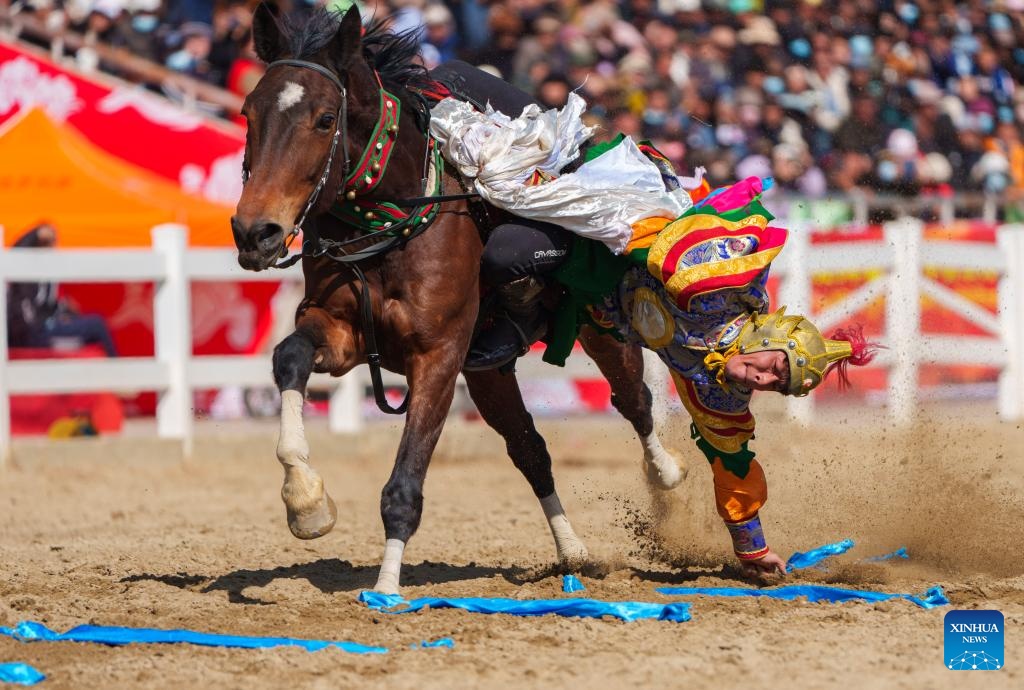
An equestrian performer puts on a show in Lhasa, southwest China's Xizang Autonomous Region, Feb. 20, 2026. Monday was the Chinese New Year's Eve, which was just one day earlier than the Night of Gutu of the Tibetan calendar this year, the prelude to the Tibetan New Year, or Losar, the most important festival in the Tibetan calendar.
Losar is a time for family reunions. It is marked by religious rituals, long prayers, horse racing, family gatherings and feasts.
The city of Lhasa hosted ethnic equestrian performances and horse racing on Friday, the fourth day of the Year of the Horse, and also the third day of the Tibetan New Year, showcasing superb traditional skills and offering visual enjoyment to the audience. (Xinhua/Tenzin Nyida)

Equestrian performers put on a show in Lhasa, southwest China's Xizang Autonomous Region, Feb. 20, 2026. Monday was the Chinese New Year's Eve, which was just one day earlier than the Night of Gutu of the Tibetan calendar this year, the prelude to the Tibetan New Year, or Losar, the most important festival in the Tibetan calendar.
Losar is a time for family reunions. It is marked by religious rituals, long prayers, horse racing, family gatherings and feasts.
The city of Lhasa hosted ethnic equestrian performances and horse racing on Friday, the fourth day of the Year of the Horse, and also the third day of the Tibetan New Year, showcasing superb traditional skills and offering visual enjoyment to the audience. (Xinhua/Tenzin Nyida)

Kids watch the equestrian performances in Lhasa, southwest China's Xizang Autonomous Region, Feb. 20, 2026. Monday was the Chinese New Year's Eve, which was just one day earlier than the Night of Gutu of the Tibetan calendar this year, the prelude to the Tibetan New Year, or Losar, the most important festival in the Tibetan calendar.
Losar is a time for family reunions. It is marked by religious rituals, long prayers, horse racing, family gatherings and feasts.
The city of Lhasa hosted ethnic equestrian performances and horse racing on Friday, the fourth day of the Year of the Horse, and also the third day of the Tibetan New Year, showcasing superb traditional skills and offering visual enjoyment to the audience. (Xinhua/Tenzin Nyida)
上一篇:中国科大科技商学院正式开建




最新更新
- 徐良巡演南昌站收官!匠心镌刻顶级视听,定格万众闪耀的青春篇章
- 《刁蛮新娘》杨幂变身 与孙坚上演虐恋
- 张恨水故里“中药水稻”不愁卖
- 小众但有趣!CES展示全球最小移动固态硬盘,专为iPhone设计仅重10g
- 今年全国粮食总产量达13908.2亿斤(新数据 新看点)
- 签订承诺书 抵制低俗节目
- 大S主持《康熙》被嫌不够猛 小S:干脆露两点
- AMD RX 9070系列显卡预计将于1月23日开启预购:中端市场新血液
- 今年全国粮食总产量达13908.2亿斤(新数据 新看点)
- 上调“两项补贴”标准,大冶上万名残疾人直接受益
- Selina戴头套复健照曝光 粉丝难过:你受了多少苦
- 人民网观点:“慢火车”走红,速度外更见民生情怀
推荐阅读
猜你喜欢
- 破解流通堵点!全国首个数据交易“解纷站”在穗上线
- 自媒体人的“天籁”之选!舒尔SHURE携新品麦克风亮相CES
- 开局之年看中国丨意念控物 废物重生 河南“新字号”改写未来
- 涡阳:10支“文艺轻骑兵”助力扫黑除恶
- 金曲最佳新人暨最佳制作人孔令奇与大马名媛陈铭君于吉隆坡举办盛大中式婚礼
- 郭德纲徒弟打人案宣判 其经纪人王海被判拘留12日
- 涡阳:10支“文艺轻骑兵”助力扫黑除恶
- 曝印小天片场殴打女演员 只因对方不听其指挥
- 微短剧《梦笔不能停》开机仪式在黄山市举行
- 铜陵一公益项目入选全国项目库
- 护眼再升级,聚焦CES 2025,TCL新款NXTPAPER手机发布
- 张咪“诈骗门”昨开庭 原告索赔数额增至250万元
雪地里面过大年 旅游+民俗解锁新春新玩法
